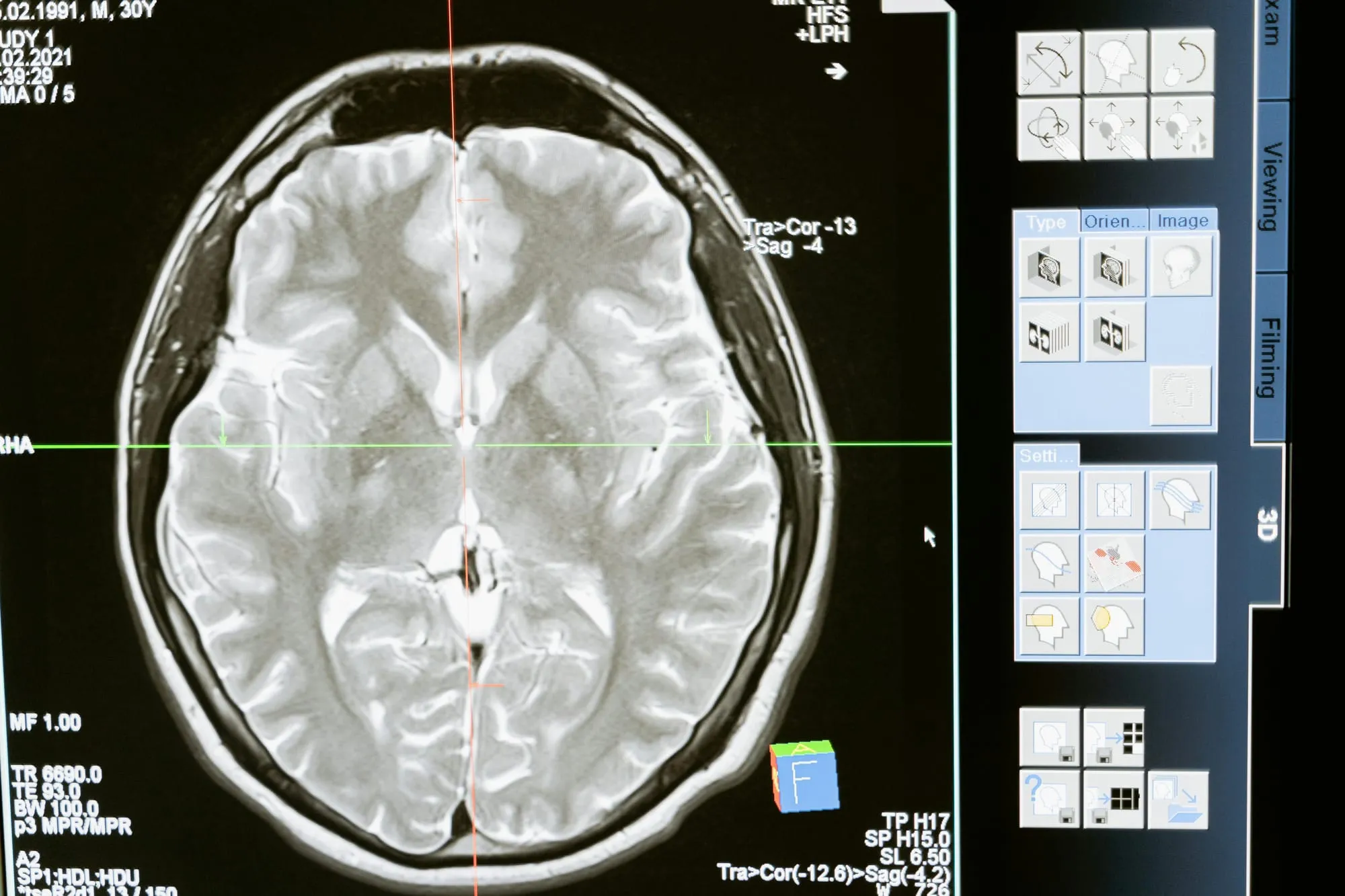
Neuroplasticity: The Brain That Renews Itself
The adult brain rewires itself continuously in response to attention, repetition, and emotional charge. Paul named the same process two thousand years ago.

“And be not conformed to this world: but be ye transformed by the renewing of your mind.” — Romans 12:2 (KJV)
“Put off concerning the former conversation the old man, which is corrupt according to the deceitful lusts; and be renewed in the spirit of your mind.” — Ephesians 4:22–23 (KJV)
The dominant scientific dogma for most of the twentieth century was that the adult brain was fixed. Childhood was the window of malleability; everything after was the slow degradation of a wired apparatus. This turned out to be wrong, and the correction is one of the more important findings in the history of neuroscience. The brain rewires itself continuously throughout life in response to what it pays attention to. The phenomenon is called neuroplasticity, and it has been documented at every anatomical level researchers have thought to look: synapses, dendrites, cortical thickness, white matter tracts, hippocampal volume, even the generation of new neurons in the adult brain.
The contemplative traditions have known this for three thousand years and described it in their own vocabulary. The Hebrew prophets called it the circumcision of the heart. Paul called it metamorphoo, literal metamorphosis, when he wrote in Romans 12:2 that the reader is to be transformed by the renewing of the mind. The Hindu traditions described it as the cultivation of vasanas (impressions) and samskaras (deep imprints) through repeated practice. The Buddhist tradition called it the path. The wager here is that the contemplative practices these traditions developed were operating on the same biological mechanism modern neuroscience has now measured. The convergence is real. What follows walks through the science, the reading the catalog gives it, and the operational implications.
The Discovery
Donald Hebb, in The Organization of Behavior (1949), proposed what became the foundational principle: neurons that fire together, wire together. Repeated co-activation of two neurons strengthens the synaptic connection between them. Hebb proposed this as a theoretical mechanism for learning before the synaptic biology had been worked out. The mechanism was confirmed empirically by Tim Bliss and Terje Lømo in 1973, who documented Long-Term Potentiation (LTP), the persistent strengthening of synapses based on patterns of activity, in the hippocampus of anesthetized rabbits. Eric Kandel won the 2000 Nobel Prize for his work on the cellular and molecular mechanisms of synaptic plasticity, much of it conducted on the marine snail Aplysia.
Marian Diamond, working at Berkeley in the 1960s, showed that adult rat brains kept in enriched environments grew measurably thicker cortices than those kept in impoverished environments. The dogma of the fixed adult brain began to crack. Michael Merzenich at UCSF demonstrated in the 1970s and 1980s that the somatosensory cortex of adult monkeys remapped itself in response to training: a finger heavily used in a discrimination task came to occupy more cortical territory than a finger left idle. The findings were initially disputed and eventually accepted as foundational.
Peter Eriksson and colleagues, in a landmark 1998 paper in Nature Medicine, confirmed that the adult human brain generates new neurons in the hippocampus throughout life. The discovery that adult neurogenesis was real in humans, not just in birds and rodents, was the final break with the fixed-brain dogma.
By 2007, Norman Doidge’s The Brain That Changes Itself had brought the literature to a general readership. The book documented case after case of patients with strokes, congenital disabilities, learning disorders, and obsessive-compulsive disorder achieving recovery through targeted attention-based interventions. The shift in the paradigm was complete. The adult brain rewires itself. The mechanism is attention, repetition, and emotional engagement.
The Anatomical Evidence
The structural evidence for neuroplasticity is now overwhelming. A representative sample of findings:
The hippocampus. Eleanor Maguire’s lab at University College London published a series of studies on London taxi drivers between 2000 and 2011. London cabbies must memorize an enormous mental map of the city to pass the Knowledge, the city’s licensing exam. Maguire’s MRI work showed that licensed cabbies had measurably larger posterior hippocampi than non-cabbies, and the size correlated with years of experience. When cabbies retired, the hippocampi shrank back toward baseline over several years. The anatomical change tracked the cognitive demand.
The prefrontal cortex. Sara Lazar at Massachusetts General Hospital documented in a 2005 study that long-term meditators showed measurably thicker cortex in regions involved in attention, interoception, and sensory processing. The effect was dose-dependent: more years of practice correlated with more cortical thickening. Subsequent imaging studies have replicated this across multiple meditation traditions.
The amygdala. Eight weeks of mindfulness-based stress reduction (MBSR) was shown by Britta Hölzel and colleagues in 2010 to reduce gray matter density in the amygdala, correlated with reductions in subjective stress. The fear-response apparatus literally shrank in response to the practice.
The insula. The insular cortex, central to interoceptive awareness, shows measurable thickening in meditators with sustained practice. Anyone who attends regularly to the felt sense of the body is, at the structural level, building more tissue to do that work.
The motor cortex. Pascual-Leone’s work at Harvard from the 1990s onward produced one of the most striking findings in the literature. Subjects who imagined practicing a piano sequence for two hours a day showed motor cortex changes nearly equivalent to subjects who physically practiced the same sequence. Mental rehearsal alone, sustained attention to the imagined act, produced anatomical change. The implication is that the brain does not distinguish strongly between attention to imagined experience and attention to physical experience at the level of structural plasticity.

The visual cortex. Adults who lose their sight, particularly through early Braille-reading training, recruit the visual cortex for tactile processing. The cortex repurposes itself to handle the input it actually receives. The hardware that should have been processing visual information now processes touch, with measurable expansion of representational territory.
Gene expression. Kaliman, Davidson, and colleagues showed in a 2014 paper that a single intensive day of mindfulness practice produced rapid down-regulation of pro-inflammatory gene expression in experienced meditators. Plasticity is not only synaptic and structural. It runs all the way down to which genes get transcribed.
Telomere length. Elissa Epel and Elizabeth Blackburn (the Nobel laureate for telomere research) demonstrated in 2009 that meditation and contemplative practice correlated with longer telomeres, the protective caps on chromosomes that shorten with age and stress. Sustained practice appeared to slow cellular aging at the chromosomal level.
The pattern is structural rather than incidental. At every level a researcher has bothered to measure, sustained attention modifies anatomy.
The Mechanism
Neuroplasticity operates through several interconnected processes:
Synaptic strengthening (LTP) and weakening (LTD). Synapses that fire repeatedly together strengthen. Synapses that do not fire weaken. The brain is constantly tuning its connectivity matrix based on use.
Dendritic growth. Neurons grow new dendritic branches in response to sustained input. The cell extends its receptive surface area to capture more of the signal it is being asked to process.
Synaptic pruning. Unused connections are eliminated. Childhood involves massive overproduction of synapses followed by experience-dependent pruning. The adult brain continues this process, though more slowly. Use it or lose it is mechanically true at the cellular level.
Neurogenesis. New neurons are generated in the adult hippocampus and olfactory bulb, primarily, with controversial evidence for other regions. The new neurons integrate into existing circuits based on activity patterns.
Myelination. White matter tracts thicken with use. Sustained practice in any modality, language, motor skill, contemplative practice, produces measurable increases in myelin around the relevant pathways, which speeds neural transmission.
Gene expression. Plasticity reaches down to which genes get transcribed in which cells under what conditions. The Kaliman/Davidson finding is not isolated. Sustained practices modulate the entire transcriptome.
The lever across all of these processes is the same: attention combined with repetition combined with emotional engagement. The contemplative literature has been pointing at this combination for three thousand years. The neuroscience has now measured it.
Where the Catalog Lands
This catalog has been describing neuroplasticity from multiple angles without always naming it:
The Observer Effect described how attention modulates physiological state in real time. Neuroplasticity is the long-timescale consequence: the modulations accumulate into structural change.
The Default Mode Network described the neural substrate of self-referential thinking. Sustained DMN modulation through meditation produces measurable structural change in the network over months and years.
The Biology of Belief described how belief becomes biological signal through the cell membrane’s perception apparatus. Neuroplasticity is what happens when the signal is sustained: the cellular machinery reorganizes to support the held state.
The I AM Deep Dive described the divine name as the reader’s own self-awareness, and the predicate-attaching machinery as what builds the egoic self. Neuroplasticity is the mechanism by which the predicates get installed structurally. I am tired run on continuous loop wires the tired-self into the cortical architecture.
Be Like a Child described the lightness over seriousness that long-arc games require. Childhood plasticity is higher than adult plasticity, but the reading here is that adult plasticity is sufficient for sustained reprogramming. The reader just has to know what to install.
Joe Dispenza is the figure most directly leveraging this material clinically. His core operating claim is that a sustained internal state, held with sufficient consistency and emotional engagement, produces measurable physiological reorganization: receptor downregulation, gene expression shifts, neural rewiring. His clinical claims sometimes outrun his evidence base, but the broader meditation-and-neuroplasticity literature he draws on is solid. The operationally specific contribution he makes is the insistence that brief or inconsistent practice does not produce structural change. The reps must accumulate. The state must be held long enough for the physiology to follow.
Paul described the same instruction in Romans 12:2: be ye transformed by the renewing of your mind. The Greek verb is metamorphousthe, be transformed, be metamorphosed. It is the same word used in Matthew 17:2 for Christ’s transfiguration. The renewing, anakainosis, is from kainos, the word for new in the sense of of a new kind, not merely recent. The construction is structural. Paul is describing what the neuroscience now measures: a slow, repeated, attention-mediated metamorphosis of the mind into a new kind of mind, through the renewing of its substrate.
The Operational Protocol
What this catalog prescribes, given the convergence:
First, accept the timescale. Synaptic LTP takes hours. Structural change takes weeks to months. Major rewiring takes years of sustained practice. Anyone who tries the protocol for two weeks and abandons it has not run the protocol. The Dispenza insistence on reps applies. The Maguire cabbies needed years to enlarge their hippocampi. The Lazar meditators needed years of practice to thicken their cortex. Plasticity is real and reliable, but it is not fast. The exponential math underneath this timescale, and why the curve is invisible at the start, is Compounding Attention: The Matthew Effect.
Second, the SATS window is the highest-leverage plasticity window. The hypnagogic state at sleep onset and the hypnopompic state at waking are periods of natural theta dominance. Theta is the wave state associated with maximum subconscious receptivity and, by extension, with peak plasticity for new pattern installation. Three to five minutes of felt-real assumption at the SATS window is worth hours of attempted reprogramming during ordinary waking states. The brain is most plastic when the analytical filter is offline.
Third, the emotional charge is the consolidation signal. Memory consolidation in the brain requires three ingredients: repetition, attention, and emotional valence. Neutral repetition produces minimal consolidation. Emotionally charged repetition produces strong consolidation. The catalog’s repeated instruction that the assumed state must be felt real, held with the autonomic and emotional signature of someone for whom the assumption is already true, is the consolidation signal in operational form. Without the felt sense, the reps do not install.
Fourth, sleep is the consolidation phase. The brain consolidates memory during deep sleep, particularly slow-wave sleep and REM. Whatever has been attended to during the day is consolidated during the night. This is why the pre-sleep mental state matters more than the morning state for plasticity purposes. Anyone who falls asleep in a worried, distracted, anxious state consolidates that pattern. Anyone who falls asleep in the felt sense of the assumed state consolidates that.
Fifth, the 90-second rule applies to emotional patterns. Jill Bolte Taylor documented in My Stroke of Insight (2008) that the chemical cascade for a given emotion lasts roughly ninety seconds. After that, if the emotion persists, the reader is choosing to re-fire the neural pattern that produced it. This is plasticity working against the reader. Every ninety seconds of self-pity, anger, or limerent rumination is another rep on the unwanted pattern. The longer case on this exact failure mode is Limerence. Letting the chemical cascade pass without re-firing is the disidentification at the neural level.
Sixth, use it or lose it. Disidentification by non-repetition. Synapses that do not fire weaken and eventually prune. The pattern that stops running atrophies. This is the mechanism behind every contemplative tradition’s instruction to let go, not to fight the thought, but to refuse to feed it with additional firing. The thought arises, passes, and the neural substrate it rode on weakens incrementally each time it is not pursued.
Seventh, visualization is plasticity. Pascual-Leone’s finding that imagined practice produces motor-cortex change nearly equivalent to physical practice is one of the most operationally significant findings in the neuroplasticity literature. The brain rewires itself in response to attention, regardless of whether the attended object is physically present. This is the empirical validation of Neville’s central claim: the imagined scene, fully inhabited, becomes structurally real at the level of the substrate that will then produce the corresponding behavior in the world.
Eighth, the gene-expression layer responds within days. Kaliman/Davidson 2014 showed that one intensive day of mindfulness practice produced measurable down-regulation of pro-inflammatory gene expression. The reader does not have to wait years for plasticity to begin paying off. The gene-expression layer begins to shift within days. The structural layer follows over months. The deepest layer takes years. All three are real, and all three accumulate.
Closing
The brain is not fixed. The dogma that said it was held the field for most of the twentieth century and is now thoroughly refuted. The brain renews itself continuously in response to what it pays attention to, what it repeats, and what it feels deeply. Paul described this in Romans 12:2 with a Greek verb that means literal metamorphosis. The Hindu traditions described it through the cultivation of samskaras. The Buddhist tradition built its entire practice architecture on it. Modern neuroscience has now measured it at every anatomical level from gene expression to cortical thickness.
The wager here is that the reader who internalizes this stops treating his current self as a fixed object to be defended and starts treating it as a malleable substrate to be deliberately re-formed. The renewing of the mind is not a metaphor. It is a measurable biological process. The only meaningful question is what one chooses to install during the years one has left to install it.
Be transformed. The mechanism is real. The substrate is plastic.
Sources
Foundational neuroplasticity:
- Donald Hebb, The Organization of Behavior (1949), Hebbian plasticity
- Tim Bliss and Terje Lømo, “Long-lasting potentiation of synaptic transmission in the dentate area of the anaesthetized rabbit” (Journal of Physiology, 1973), LTP discovery
- Eric Kandel, In Search of Memory (2006); Nobel Prize 2000
- Marian Diamond, Enriching Heredity (1988)
- Michael Merzenich, Soft-Wired (2013)
- Peter S. Eriksson et al., “Neurogenesis in the adult human hippocampus” (Nature Medicine, 4:1313–1317, 1998)
- Norman Doidge, The Brain That Changes Itself (2007), The Brain’s Way of Healing (2015)
Meditation and structural change:
- Sara W. Lazar et al., “Meditation experience is associated with increased cortical thickness” (NeuroReport, 16:1893–1897, 2005)
- Britta K. Hölzel et al., “Stress reduction correlates with structural changes in the amygdala” (Social Cognitive and Affective Neuroscience, 5:11–17, 2010)
- Perla Kaliman, Richard Davidson et al., “Rapid changes in histone deacetylases and inflammatory gene expression in expert meditators” (Psychoneuroendocrinology, 40:96–107, 2014)
- Elissa S. Epel et al., “Wandering minds and aging cells” (Clinical Psychological Science, 2013)
- Elizabeth Blackburn and Elissa Epel, The Telomere Effect (2017)
Skill acquisition and structural change:
- Eleanor A. Maguire et al., “Navigation-related structural change in the hippocampi of taxi drivers” (PNAS, 97:4398–4403, 2000); follow-ups 2006, 2011
- Alvaro Pascual-Leone et al., “Modulation of muscle responses evoked by transcranial magnetic stimulation during the acquisition of new fine motor skills” (Journal of Neurophysiology, 1995), mental practice motor cortex study
Convergence:
- Bruce Lipton, The Biology of Belief (2005)
- Joe Dispenza, Breaking the Habit of Being Yourself (2012), Becoming Supernatural (2017)
- Iain McGilchrist, The Master and His Emissary (2009)
- Jill Bolte Taylor, My Stroke of Insight (2008), the 90-second rule
Scripture (KJV): Romans 12:2. Ephesians 4:22–23. 2 Corinthians 5:17. Matthew 17:2 (the Transfiguration, metamorphousthe). Philippians 4:8.
Caveats stand. Neuroplasticity is real and well-replicated, but the specific clinical claims of figures like Joe Dispenza sometimes outrun the evidence base: sustained meditation produces measurable structural change over years, not weeks, and not every claimed reversal of disease is documented at the level Dispenza describes. The wager here is that the underlying mechanism is sound and operationally usable, not that every popular claim about brain rewiring is correct. Take nothing literally, subject everything to inquiry, keep what aligns with direct experience, and discard the rest.