Devil's Advocate: Astrology Might Be Real
Astrology may be real as symbolic language, not deterministic prediction. Scripture, the church calendar, and precession all converge on the same case.

“Canst thou bind the sweet influences of Pleiades, or loose the bands of Orion? Canst thou bring forth Mazzaroth in his season? or canst thou guide Arcturus with his sons?” — Job 38:31–32 (KJV)
“And there shall be signs in the sun, and in the moon, and in the stars.” — Luke 21:25 (KJV)
The modern educated reader reflexively dismisses astrology as superstition. The dismissal is so complete that mentioning the subject in serious company is socially costly, and the assumption is that anyone defending astrology is doing so from credulity rather than evidence. The claim here is that this dismissal is premature and structurally lazy. Astrology might be real in a specific, defensible sense: not as a deterministic system in which the planets emit forces that compel behavior, but as a working symbolic language that has been independently developed across multiple traditions to describe real patterns in consciousness and time, with an evidential record that includes scripture itself.
What follows walks through the convergent evidence. The cosmic calendar built into the Christian religious year. The Bible’s own references to the zodiac. The 12 disciples as the 12 zodiacal signs. The precession of the equinoxes as the structural driver of the major religious shifts in human history. The four Gospels as the four fixed signs of the zodiac. The sun’s annual journey encoded in the gospel narratives. Modern depth psychology and statistical research that has refused to fully dismiss the field. Each strand alone might be coincidence. The convergence is what the reading here treats as the actual signal.
The Cosmic Calendar Embedded in Scripture
The Christian liturgical year is astronomically structured. This is not a controversial claim. It is a documented fact of religious history that the major feasts of the church calendar were placed on or near the four cardinal points of the solar year, the two solstices and the two equinoxes.
Christmas falls three days after the winter solstice on December 25. The winter solstice (December 21–22) is the day of least sunlight in the Northern Hemisphere, the sun’s annual death. For three days after the solstice, the sun appears to stop moving on the horizon, the literal meaning of solstice is sun-stand-still. On December 25, the sun begins its measurable northward movement again, the sun is born again. The early church fathers placed the birth of Christ on this day not by coincidence but by deliberate alignment. The same date had been the Roman feast of Sol Invictus (the unconquered sun), the Egyptian feast of Horus, the Persian feast of Mithras, and several other solar-deity birth celebrations. Christianity inherited and consecrated the date.
Easter falls on the first Sunday after the first full moon after the spring equinox. The spring equinox (March 20–21) is the day when sunlight and darkness are equal, the resurrection of the sun to dominance over the year’s dark half. The resurrection of Christ celebrated at Easter is, in the solar reading, the same event the cosmos has been performing every year for billions of years.
The Feast of John the Baptist falls on June 24, three days after the summer solstice. John 3:30, He must increase, but I must decrease, is, on the solar reading, the precise astronomical instruction John is giving. From the summer solstice forward, the sun (Christ) begins to decrease through summer and autumn. From the winter solstice forward, the sun (Christ) begins to increase through spring. John, born six months before Christ in the gospel narrative, is at his peak when Christ’s sun is at the bottom of its year, and decreases as Christ’s sun increases. The Feast of John the Baptist and the Feast of Christ’s Nativity are placed at the two solstices for this reason. The narrative and the astronomy are saying the same thing.
Michaelmas (the feast of the archangel Michael) falls on September 29, near the autumn equinox. The structure is complete. The four cardinal points of the solar year are anchored by four major Christian feasts. Christmas, Easter, John the Baptist, and Michaelmas are not arbitrary placements. They are the deliberate alignment of religious narrative with cosmic timing.
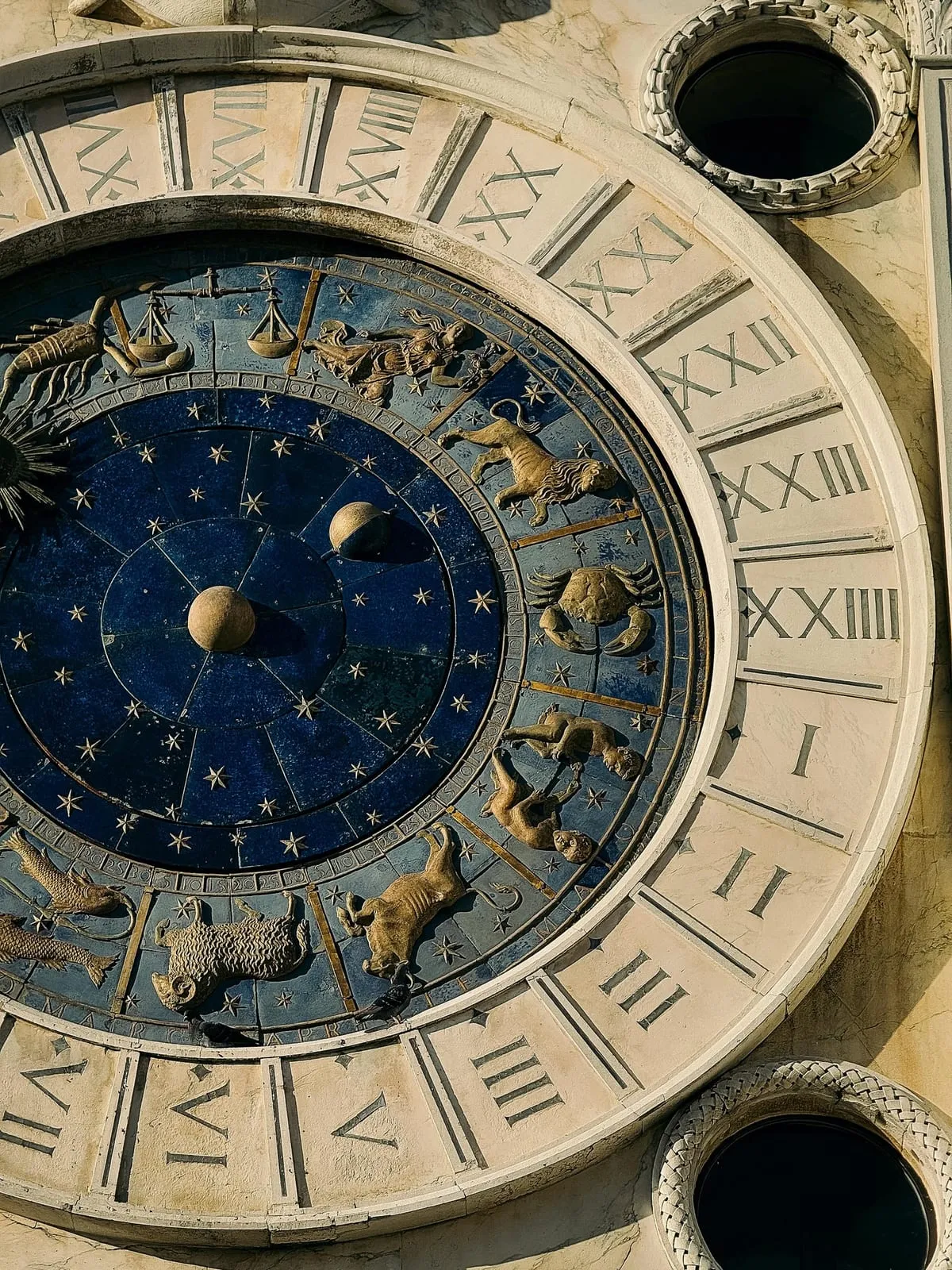
The Bible itself references the zodiac directly. Job 38:32: Canst thou bring forth Mazzaroth in his season? The Hebrew Mazzaroth is the zodiac, the twelve constellations through which the sun moves across the year. Yahweh, in the climactic discourse from the whirlwind, names the zodiac as one of his own works. Genesis 1:14: Let there be lights in the firmament of the heaven… and let them be for signs, and for seasons, and for days, and years. The heavenly bodies are explicitly given as signs, the Hebrew is othoth, the same word used elsewhere for omens and meaningful patterns. The biblical position is not that astrology is forbidden but that the celestial bodies are signs the Creator placed for human reading.
Matthew 2 records the Magi following a star to find the Christ child. The Magi were astrologers, there is no other word for what they were doing, and the text does not condemn them. The text records their astrology as the means by which they identified the most important birth in the canonical narrative. The gospel writers chose to begin the story of Christ with astrologers reading the sky correctly.
The Twelve Disciples as the Twelve Signs
The structural number twelve appears across the Hebrew and Christian scriptures with a consistency that cannot be coincidence. Twelve tribes of Israel. Twelve disciples. Twelve gates in the New Jerusalem (Revelation 21:12). Twelve fruits on the tree of life (Revelation 22:2). Twelve thrones (Matthew 19:28). Twelve hours of day and twelve hours of night. Twelve months in the lunar-solar year. Twelve cranial nerves in the human skull. Twelve signs of the zodiac.
The reading here is that twelve is not an arbitrary number. It is the structural division of any cyclical totality into its constituent phases. The sun’s annual journey divides into twelve roughly equal zodiacal segments. The human cognitive apparatus divides into twelve cranial nerves serving twelve distinct functions. The tribal structure of the covenant people was designed to mirror the cosmic structure of the heavens. The disciples of Christ were chosen to mirror the same structure. As above, so below is the Hermetic formula, and this catalog treats it as a structural observation rather than a mystical platitude.
The specific mapping of the twelve disciples to the twelve zodiacal signs is a tradition with multiple competing versions: Donahue, Manly P. Hall, the Theosophists, Edgar Cayce. The working synthesis here assigns the disciples based on three factors: the etymology of each name, the disciple’s recorded behavior in the four Gospels, and the failure mode each exhibits matched to the shadow side of the corresponding sign. The result is a coherent mapping in which each disciple embodies the faculty associated with his sign.
Peter as Aries. The first disciple, the cardinal fire, the impulsive leader who jumps out of the boat, draws the sword in Gethsemane, and denies Christ three times. Aries’ shadow is exactly Peter’s: bold conviction followed by collapse.
Andrew as Taurus. The patient builder, the steady recruiter, the one who quietly brings others to Christ. Taurus is fixed earth, reliable, grounded, the one who shows up.
James the Greater and John as Gemini. The Sons of Thunder. Gemini is the only zodiacal sign represented by two figures, and the gospel narratives consistently treat James and John as a pair, called together, present together at the Transfiguration and at Gethsemane. One faculty expressed in two directions.
Thomas as Cancer. Cardinal water, the protector of the inner circle, the one who demands proof before letting anything in. Doubting Thomas’s doubt is protective: I will not let my heart be broken twice.
Matthew (Levi) as Leo. Fixed fire, the sun’s own sign, the faculty of public witness. Matthew the tax collector becomes Matthew the evangelist, his Gospel the most ordered and royal of the four, opening with Christ’s genealogy and closing with the Great Commission.
James the Less as Virgo. Mutable earth, the discerning servant, the one whose epistle gives the New Testament its most practical instruction: faith without works is dead. Disciplined humble follow-through.
Philip as Libra. Cardinal air, the threshold faculty, always weighing, always mediating, always positioned between two parties trying to bring them together. Lord, show us the Father.
Judas Iscariot as Scorpio. Fixed water: death, betrayal, transformation through dissolution. Judas is the disciple whose betrayal is structurally required for the cross to occur. Without Judas, no crucifixion; without the crucifixion, no resurrection. The faculty of the necessary death.
Bartholomew (Nathanael) as Sagittarius. Mutable fire, the philosopher’s sign, the honest seeker. Nathanael is an Israelite in whom is no guile, and his first reaction to Jesus is the perfect Sagittarian question: Can any good thing come out of Nazareth? Honest skepticism followed by full conversion when shown the evidence.
Simon the Zealot as Capricorn. Cardinal earth, the disciplined revolutionary, structured ambition channeled into long-game work. Simon came from the Zealot political movement; Capricorn channels revolutionary fire into patient institutional commitment.
Thaddeus (Jude) as Aquarius. Fixed air, the water-bearer of the new age, the visionary distributor. Thaddeus’s single recorded question is the Aquarian question par excellence: how is it that thou wilt manifest thyself unto us, and not unto the world?
Matthias (the replacement for Judas) as Pisces. Mutable water, dissolution and reconstitution, the faculty that arises after the necessary death has occurred. Matthias is mentioned once in Acts 1 and then dissolves into the broader apostolic mission, the perfect Piscean trajectory.
The wager here is not that these specific assignments are received doctrine. The wager is that the structural fact of twelve disciples is intentional, that the gospel writers were operating in a symbolic literacy that included the zodiac, and that the convergence of twelve faculties of consciousness with twelve cosmic divisions is the encoded teaching the gospel narratives have been carrying for two thousand years.
The Precession of the Equinoxes
The Earth’s axis wobbles slowly, a complete cycle takes approximately 25,920 years. As the axis wobbles, the position of the sun against the background of the zodiacal constellations at the spring equinox shifts gradually backward through the signs. The shift is too slow to notice within a single lifetime, but over the course of two thousand years, the equinox sun moves into a new zodiacal constellation. This is the precession of the equinoxes, documented by Hipparchus in the second century BCE.
The result is that human history can be divided into great ages, each approximately 2,160 years long, named for the constellation in which the spring sun rises. The major religious shifts of recorded human history correlate with these ages with a precision treated here as significant.
The Age of Taurus ran from roughly 4000 BCE to 2000 BCE. The dominant religious symbolism of the period was bull worship: the Egyptian Apis bull, the Cretan bull of Minos, the bulls of Mesopotamia. The golden calf the Israelites worshipped in Exodus 32 was a Taurean idol.
The Age of Aries ran from roughly 2000 BCE to 0 CE. The dominant religious symbolism shifted to the ram. Moses, the Aries-age prophet, broke the golden calf (the Taurean idol) and instituted the Passover ritual in which a ram was sacrificed (Exodus 12). The shofar, the ram’s horn, became the central instrument of Jewish liturgy. The shift from Taurus to Aries is the shift from bull worship to ram-based sacrifice, and it is recorded in scripture as the foundational transition of the Hebrew religious narrative.
The Age of Pisces ran from roughly 0 CE to 2000 CE. The dominant religious symbolism became the fish. The early Christian symbol was the ichthus, the fish. Christ called his disciples fishers of men. The loaves-and-fishes miracle is a Piscean miracle. The Christian era is the Age of Pisces, and the symbology of the religion makes this explicit.
The Age of Aquarius is now beginning. The transition is gradual, astronomers disagree by several centuries about the exact start, but the reading of Luke 22:10 here is suggestive. When Jesus instructs his disciples to prepare the Passover, he tells them: Behold, when ye are entered into the city, there shall a man meet you, bearing a pitcher of water; follow him into the house where he entereth in. In a culture where water was carried by women, a man bearing a pitcher of water is a striking image, and the iconography of the water-bearer is precisely Aquarius. The reading here is that Christ is pointing his disciples, at the moment of the Last Supper, toward the age that will follow his own.
The correlation between precessional ages and dominant religious symbolism is not proof of astrology in the deterministic sense. It is evidence that the great religious narratives of human history have been encoding the celestial structure of their own historical moment. The narratives know what age they are in. The astrology is built in.
The Four Gospels as the Four Fixed Signs
The four Gospels of the New Testament have been associated since the earliest Christian iconography with the four living creatures of Ezekiel 1 and Revelation 4. Matthew is the man (or angel). Mark is the lion. Luke is the bull. John is the eagle. The association is unanimous across the early church fathers.
These four creatures are the four fixed signs of the zodiac.
Aquarius is the man (the water-bearer). Leo is the lion. Taurus is the bull. Scorpio is the eagle (the higher form of Scorpio in ancient astrology; the scorpion is the fallen form, the eagle is the redeemed form, and the ancient texts use both interchangeably depending on context).
The four fixed signs are the four corners of the zodiac, the structural pillars of the celestial order. Ezekiel 1:10 describes the four creatures with the faces of man, lion, bull, and eagle as the four corners of the divine throne. Revelation 4:7 repeats the imagery. The four Gospels were assigned to these four creatures by the early church because the symbolic literacy of the period recognized the cosmic structure being invoked.
The four Gospels are, in this reading, the four cosmic pillars of the Christ narrative. Matthew (man/Aquarius) opens with the genealogy, the human lineage. Mark (lion/Leo) is the Gospel of action, royalty, courage. Luke (bull/Taurus) is the Gospel of sacrifice, the bull is the sacrificial animal, and Luke alone records the story of the Good Samaritan and the parables of the lost. John (eagle/Scorpio) is the Gospel of the soaring vision, the prologue’s In the beginning was the Word is the eagle’s high view of the entire cosmic narrative.
This is not a marginal interpretation. The Tetramorph, the four-faced angel composed of the four creatures, appears in Romanesque and Byzantine iconography across a thousand years of Christian art. The Book of Kells frontispiece arranges the four Gospel symbols in the cardinal directions. The cosmic structure encoded in the four Gospels was understood by the medieval church to be the structural foundation of the New Testament. The claim here is that this understanding has been lost in the modern Protestant and rationalist readings, and that recovering it is part of recovering the symbolic literacy scripture was written within. The broader case that scripture is a coded manual operating on multiple layers simultaneously is The Real Bible.
The Sun as the Christ Figure
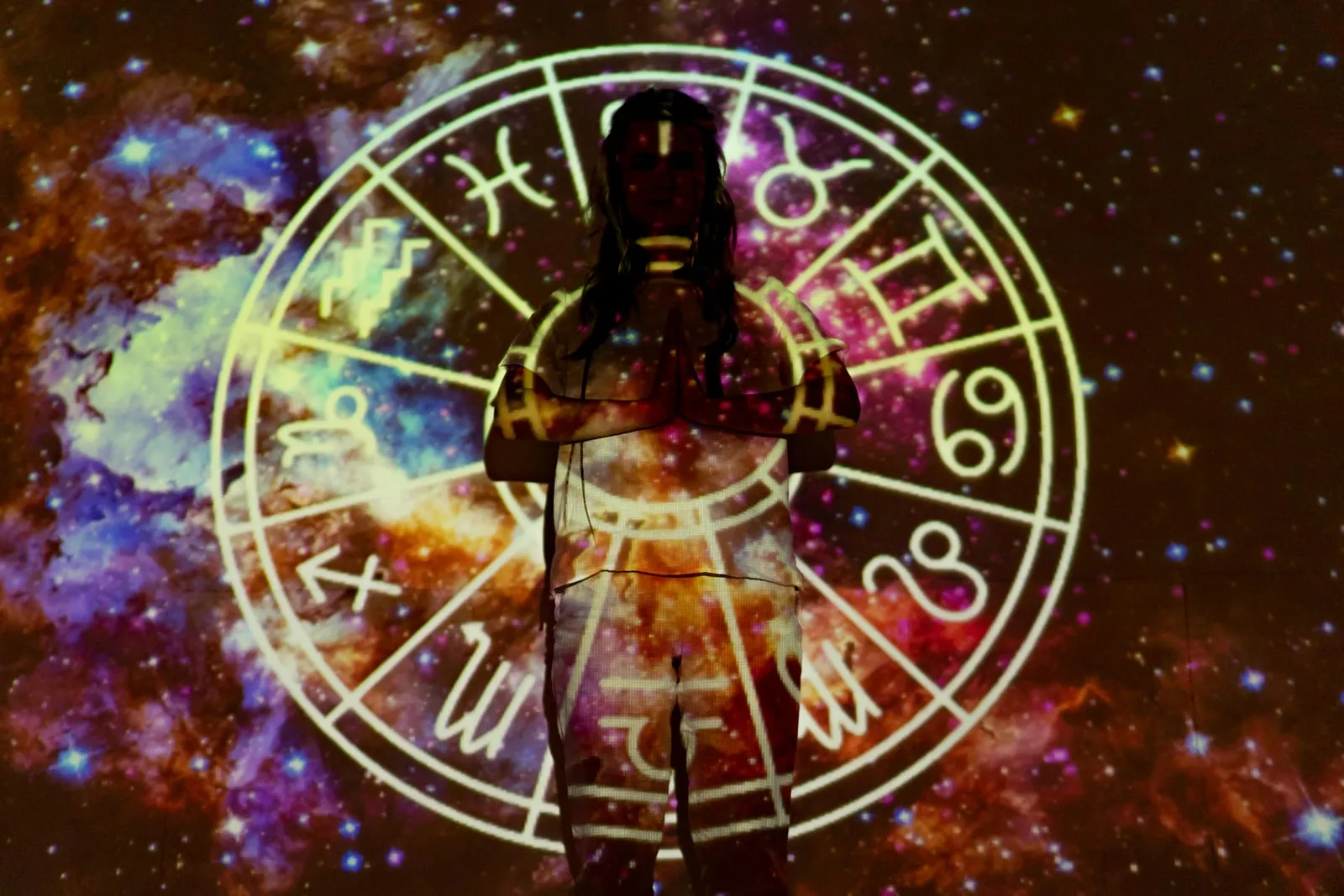
The most contested claim Bill Donahue makes most directly: the gospel narrative of Christ’s life, death, and resurrection is also a coded narrative of the sun’s annual journey through the zodiac. The sun is born to the virgin (Virgo, where the sun rises in the spring sky). The sun has twelve disciples (the twelve zodiacal signs through which it passes). The sun walks on water (the constellation of Pisces, the watery sign). The sun feeds the multitudes (sunlight feeds all living things). The sun heals the blind (light dispels darkness). The sun is crucified between two thieves (the two equinoxes, at the equator-cross). The sun dies for three days at the winter solstice and rises again at Easter.
The position here is not that the historical Christ did not exist or that the gospel narratives are merely solar mythology. The position is that the gospel narratives are operating on multiple levels simultaneously: they describe historical events, they encode anatomical and neurological teaching (the case The Real Bible develops), and they encode cosmic and astrological teaching. The narratives were written within a symbolic literacy that included all of these layers. Modern literal-historical readings see only one of them.
The wager here is that recovering the multi-level reading is the recovery of the original text. The astrological layer is one of the layers. Christ as the sun is not a denial of Christ. It is a recognition that the gospel writers saw Christ in the heavens as well as on the ground, and they wrote the text in a way that carried both. The convergence claim across multiple traditions arriving at the same operational core is The Convergence.
The Modern Defense
The catalog here is not the only voice that has refused to dismiss astrology entirely. Carl Jung took astrology seriously as a depth-psychological projection of archetypal patterns. His work on synchronicity, developed in collaboration with the quantum physicist Wolfgang Pauli, was partly inspired by his sustained study of astrological correlations. Jung wrote in 1960: We are born at a given moment, in a given place, and like vintage years of wine, we have the qualities of the year and of the season of which we are born. Astrology does not lay claim to anything more. The Jungian reading treats the natal chart as a symbolic map of the psyche’s archetypal terrain, not as a deterministic prediction.
Michel Gauquelin, working as a statistician in France from the 1950s through the 1990s, conducted large-sample studies on the birth times of elite professionals. He found that French athletes were statistically more likely than chance to be born when Mars was in certain sectors of the sky, the so-called Mars effect. The finding has been contested, replicated in some studies and not in others, and remains unresolved in the published literature. The reading here is that the unresolved status is more interesting than either confirmation or refutation. A claimed effect that has been investigated for half a century and has not been cleanly disproven is, at minimum, not the obvious nonsense that the casual dismissal claims it is.
The season-of-birth literature in psychology and epidemiology is more solidly established. Multiple studies have documented small but statistically real correlations between birth month and a range of outcomes: schizophrenia incidence, sport-team selection, certain personality traits. The mechanisms (in utero sun exposure, vitamin D levels, maternal immune state, agricultural seasonality of food availability) are plausible and do not require any astrological framework. But the structural fact remains: when you were born matters, in ways the available evidence cannot fully explain away.
The Reading
Astrology in the reading here is not a deterministic prediction system. The planets do not emit forces that compel behavior. The literal mechanical interpretation that treats the natal chart as a cause-and-effect machine is rejected.
Astrology in the reading here is a working symbolic language that has been independently developed across multiple traditions to describe real patterns in consciousness and time. The convergence of the symbolic system with the cosmic calendar of the religious year, with the structural number of the disciples, with the precession of the equinoxes, with the four fixed signs in the Gospels, with the season-of-birth research, and with the Jungian depth-psychological reading is the evidence here that something real is being pointed at. None of the individual lines of evidence is conclusive. The convergence is.
The operational implication is that the natal chart can be used as a developmental map, a symbolic description of the configuration of consciousness at the moment of incarnation, without treating it as deterministic. The astrological calendar can be used as a temporal map of cycles in collective and personal life. The symbolic literacy scripture was written within can be partially recovered by reading the cosmic layer alongside the historical and anatomical layers.
The dismissal of astrology in the modern Western tradition is part of a broader dismissal of symbolic literacy that has cost the tradition more than it has gained. The wager here is that recovering the symbolic mode is part of recovering the full inheritance.
Closing
Astrology might be real. Not as a deterministic prediction system, not as a cosmic causation mechanism, not as the planets controlling personality through emitted forces, but as a working symbolic language that has been independently developed across multiple traditions, encoded in scripture, embedded in the religious calendar, structured into the gospel narratives, and partially validated by modern research that has refused to dismiss it.
The cosmic calendar is in the church year. The Mazzaroth is in Job. The Magi are in Matthew. The twelve disciples mirror the twelve signs. The precession of the equinoxes correlates with the major religious shifts of human history. The four Gospels are the four fixed signs. The man with the pitcher of water is in Luke 22. The convergence is the case.
The position here is that the modern dismissal was the easy move and the wrong one. The harder and more honest move is to take the evidence seriously, hold the symbolic literacy as a tool, and recover the cosmic dimension of the inheritance the tradition has been carrying for three thousand years.
The stars were placed for signs. The Bible says so. Take it seriously.
Sources
Scripture and theology:
- Job 38:31–32, the Mazzaroth
- Genesis 1:14, the heavenly bodies as signs
- Matthew 2, the Magi
- Ezekiel 1:10; Revelation 4:7, the four living creatures
- Luke 22:10, the man bearing a pitcher of water
- Exodus 12 (Passover lamb) and Exodus 32 (golden calf), the Taurus-to-Aries shift
Astronomical and historical:
- Hipparchus, Commentary on Aratus and Eudoxus (c. 150 BCE), precession of the equinoxes
- Giorgio de Santillana and Hertha von Dechend, Hamlet’s Mill (1969), the precessional ages and ancient myth
- Joseph Campbell, The Hero with a Thousand Faces (1949) and The Masks of God series, comparative mythology and cosmic narrative
Modern defense and research:
- C.G. Jung, Synchronicity: An Acausal Connecting Principle (1952); letters on astrology in Letters Vol. 1–2
- Michel Gauquelin, Cosmic Influences on Human Behavior (1973); subsequent papers in Astropsychological Problems
- Robert Currey, “Empirical Astrology: Why It Is No Longer Acceptable to Say Astrology Is Rubbish on a Scientific Basis” (Correlation, 2011)
- Several season-of-birth studies in psychiatry and developmental psychology (Torrey et al., Schizophrenia and Manic-Depressive Disorder, 1994)
Convergence:
- Bill Donahue, Hidden Meanings lecture series, the gospel as solar/astrological narrative
- Manly P. Hall, The Secret Teachings of All Ages (1928), the comprehensive synthesis
Scripture (KJV): Job 38:31–32. Genesis 1:14. Exodus 12, 32. Matthew 2; 19:28. Luke 21:25; 22:10. John 3:30. Acts 1:21–26. Revelation 4:7; 21:12; 22:2.
Caveats stand. Astrology is contested, and the claims made in this piece are interpretive rather than empirically established. The position here is that the convergent evidence from scripture, the religious calendar, comparative mythology, depth psychology, and modern statistical research is collectively strong enough to make dismissal premature, not that any single line of evidence is conclusive. The specific disciple-to-sign mapping is a working synthesis with multiple competing versions, not received doctrine. Take nothing literally, subject everything to inquiry, keep what aligns with direct experience, and discard the rest.