Krishna and Christ: The Same Teaching Twice
The Bhagavad Gita and the Sermon on the Mount are not parallel scriptures. They are the same teaching recorded twice, in two languages. The verse-by-verse case.
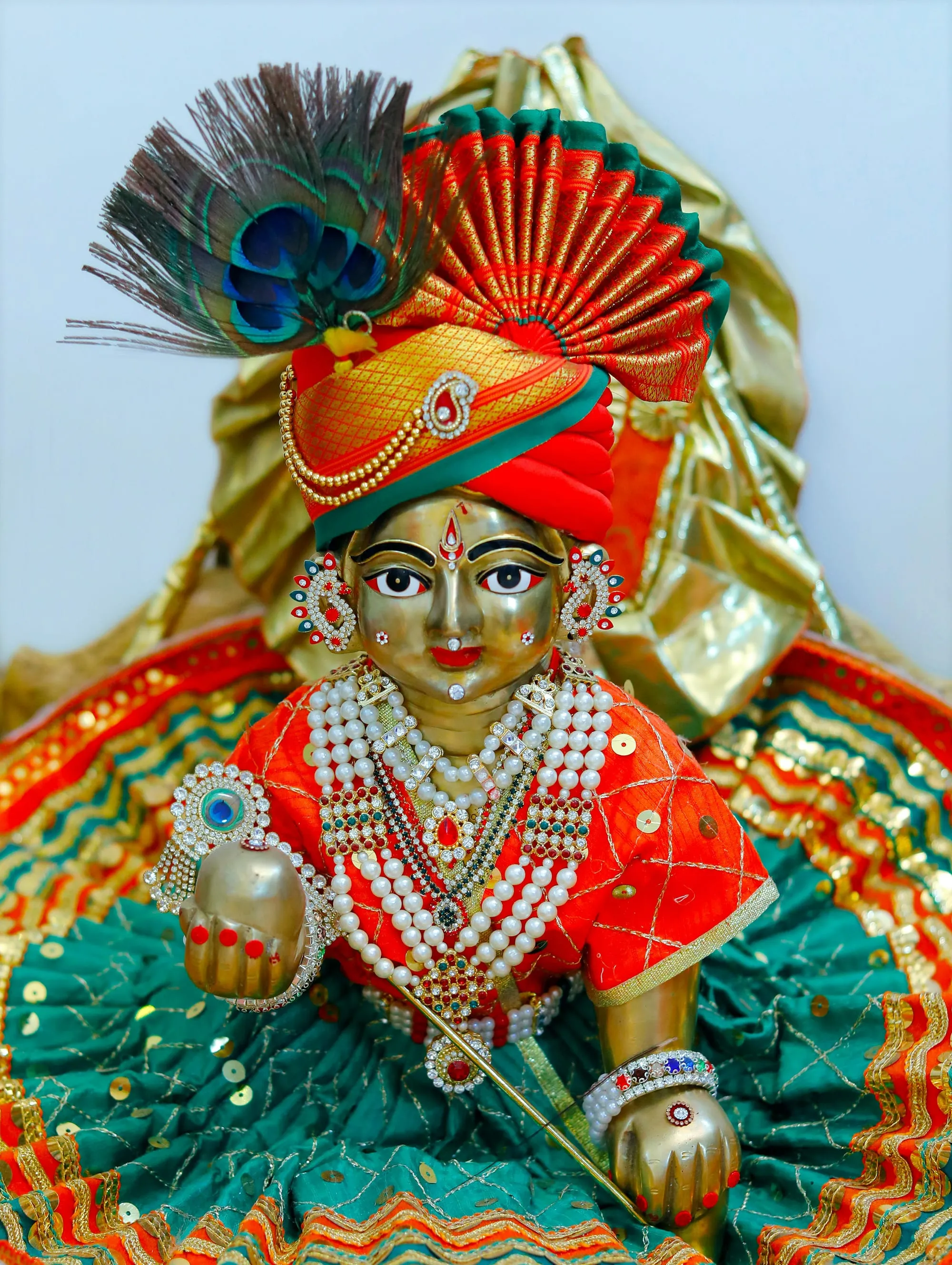
“He who sees Me in all things, and all things in Me, is never separated from Me, nor am I ever separated from him.” — Bhagavad Gita 6:30
“He that hath seen me hath seen the Father.” — John 14:9 (KJV)
The Bhagavad Gita and the Sermon on the Mount are usually filed as similar texts from unrelated cultures. They are closer than that. They are the same set of instructions, delivered in two languages to two audiences, with the same answer to the same human problem. Krishna teaching Arjuna on the battlefield at Kurukshetra, and Jesus teaching the crowd on the hill in Galilee, are not two traditions in dialogue. They are one teaching recorded twice by two lineages that never met.
The claim here, defended below with specific verse-by-verse parallels, is that the Hindu and Christian traditions point at the same facts about consciousness in vocabularies that differ on the surface and converge underneath. The Indian side kept the operational tools more intact than the Christian West managed to. If you were raised on either tradition, you were handed the other’s source material with the labels swapped. This is the same triangulation The Convergence runs across eight traditions at once. This piece takes the two closest and reads them line against line.
Placed side by side, the correspondence is not loose. It is point for point.
The Two Texts
The Bhagavad Gita is a 700-verse Sanskrit poem embedded in the larger Mahabharata epic, composed between roughly the fifth and second centuries BCE. Its dramatic frame is the conversation between Arjuna, a warrior paralyzed by despair before a great battle, and his charioteer Krishna, who reveals himself across the poem as the divine ground of being. The Gita is one of the most-translated and most-commented texts in human history. Gandhi called it his spiritual reference book. Vivekananda called it the most beautiful flower of the Hindu tradition. Aurobindo wrote a thousand-page commentary on it.
The Sermon on the Mount occupies three chapters of the Gospel of Matthew (Matthew 5–7), delivered by Jesus to a crowd on a hillside in Galilee around 30 CE and recorded a generation later. It is the dense operational core of the Christian moral and spiritual teaching, containing the Beatitudes, the Lord’s Prayer, the consider the lilies passage, the take no thought for the morrow instruction, and the closing parable of the wise and foolish builders.
Both texts are short. Both sit at the operational core of an enormous tradition. Read closely, both deliver the same set of instructions for the same human problem.
The Divine Within
The Hindu tradition’s central metaphysical claim is the identity of Atman (the self) and Brahman (the absolute). The Brihadaranyaka Upanishad (c. 800 BCE) states it directly in its great saying Aham Brahmasmi, I am Brahman. The Chandogya Upanishad states it from the second-person angle: Tat Tvam Asi, Thou art That. The Gita carries the same claim throughout. Krishna in 6:30: He who sees Me in all things, and all things in Me, is never separated from Me, nor am I ever separated from him. Krishna in 10:20: I am the Self, O Arjuna, seated in the hearts of all creatures. I am the beginning, the middle, and the end of all beings.
The Christian gospels make the same claim in different vocabulary. Luke 17:21: The kingdom of God is within you. Paul to the Colossians (1:27): Christ in you, the hope of glory. Jesus in John 10:30: I and the Father are one. John 14:20: I am in my Father, and ye in me, and I in you. Galatians 2:20: I am crucified with Christ: nevertheless I live; yet not I, but Christ liveth in me.
The two traditions are making one claim. The divine is not external. It is the deepest layer of the self, reached by going inward rather than outward, and the person who finds it discovers that what they have been calling I and what the tradition has been calling God are the same thing.
Neither tradition means this as metaphor. It is the foundational claim the rest of the architecture is built on. Once the divine is recognized as the deepest layer of the self, the practices that follow stop being attempts to reach an external being. They become attempts to remove the surface obscurations so the underlying reality can be seen.
Karma Yoga and the Sermon on the Mount
The Gita’s most-quoted verse is 2:47: karmaṇy-evādhikāras te mā phaleṣu kadācana. You have the right to action alone, never to its fruits. Let not the fruits of action be your motive, nor let your attachment be to inaction. The verse is the foundation of Karma Yoga, the path of action without attachment. Perform the action, release the outcome, let the work be its own justification rather than the result of the work.
The Sermon on the Mount gives the same instruction. Matthew 6:34: Take therefore no thought for the morrow: for the morrow shall take thought for the things of itself. Matthew 6:28–29: Consider the lilies of the field, how they grow; they toil not, neither do they spin: and yet I say unto you, That even Solomon in all his glory was not arrayed like one of these. Philippians 4:6: Be careful for nothing. Krishna in Gita 9:22: To those who worship Me with exclusive devotion, meditating on My form, I carry what they lack, and I preserve what they have. Both traditions land in the same place: do the work, surrender the outcome, the divine handles the rest.
For anyone actually trying to run this, it is not abstract spirituality but the single most applicable instruction in either tradition. The trader who needs the trade to work has already lost Karma Yoga. So has the Lucky Girl repeating affirmations out of anxiety, and the founder who measures himself by the quarter. The problem is identical in both traditions because human attention attaches to outcome by default, and that attachment is the one variable that reliably makes the outcome less likely.
Karma Yoga is, almost word for word, the stance Be Like a Child and The Laziness of Apex Predators describe in modern terms. The Hindu version is just more compressed. Action alone is your right. The fruits are not. Eight words in English, six in Sanskrit: the whole instruction in a single line.
Aham Brahmasmi and I AM
The I AM deep dive walks through the Hebrew ehyeh, the Greek ego eimi, and the Sanskrit Aham Brahmasmi as three versions of one divine name. Both Krishna and Christ use it explicitly.
Krishna throughout the Gita uses the first-person form to claim divine identity. I am the taste of water (7:8). I am the original fragrance of the earth, the light of the sun and the moon (7:8). I am the Self seated in the hearts of all creatures (10:20). I am the beginning, the middle, and the end (10:32). I am time, the great destroyer of worlds (11:32). The cumulative effect of Krishna’s I-statements across the poem is to identify himself with the totality of existence under the divine name.
Christ does the same. The seven ego eimi statements of John’s gospel, I am the bread of life, I am the light of the world, I am the door, I am the good shepherd, I am the resurrection, I am the way, I am the true vine, are the Greek counterpart of Krishna’s Sanskrit aham asmi statements. Both teachers use the present-tense divine name plus a predicate. Both demonstrate that the I AM is the operative phrase, and that whatever follows it becomes an aspect of the divine name.
The Christian gospels and the Hindu Upanishads are doing the same exegetical work on the same divine self-identification. The Burning Bush’s Ehyeh asher ehyeh and the Upanishad’s Aham Brahmasmi are not just similar. They are translations of each other.
Surrender of the Ego-Self
The Gita’s closing teaching is given in 18:66: sarva-dharmān parityajya mām ekaṁ śaraṇaṁ vraja. Abandon all dharmas and take refuge in Me alone. I shall deliver you from all evils. Do not grieve. That is the Gita’s final operational instruction. Surrender the ego-self with all its rules, identities, and self-justifications. Take refuge in the deeper Self. The deliverance is not earned. It is the consequence of the surrender.
The Christian gospels carry the same instruction. Matthew 16:25: Whosoever will save his life shall lose it: and whosoever will lose his life for my sake shall find it. Matthew 11:28–30: Come unto me, all ye that labour and are heavy laden, and I will give you rest. Take my yoke upon you… For my yoke is easy, and my burden is light. Galatians 2:20: I am crucified with Christ: nevertheless I live; yet not I, but Christ liveth in me.
The two traditions agree precisely on the structure of the move. The ego-self must be surrendered for the deeper Self to operate. The surrender is not the abandonment of action. It is the abandonment of identification with the actor. Krishna in 5:8–9 is explicit: I do nothing at all, even though I am engaged in all kinds of activities. The deeper Self operates through the surrendered ego, and the person who has made the surrender finds the actions still get done while the burden of being the doer has lifted.
For practical purposes this is the most significant teaching in either tradition. The Lucky Girl fused with her affirmations cannot release the outcome. The trader fused with his position cannot execute the stop. Without the surrender of the ego-self, the assumed state cannot be occupied cleanly. The Gita and the gospels name the same move and both treat it as the hinge everything else turns on.
The Unreality of Death
The Gita opens with Arjuna’s despair at the prospect of killing his relatives in battle. Krishna’s first substantive teaching, in 2:20, addresses the metaphysics directly: na jāyate mriyate vā kadācin, The Self is never born, nor does it ever die. It has not come into being, does not come into being, and will not come into being. Unborn, eternal, ever-existing, primeval, the Self is not slain when the body is slain.
The Christian gospels make the same metaphysical claim. John 11:25: I am the resurrection, and the life: he that believeth in me, though he were dead, yet shall he live. 1 Corinthians 15:55: O death, where is thy sting? O grave, where is thy victory? John 8:51: If a man keep my saying, he shall never see death.
Both traditions are making the same operational claim: the deepest self is not subject to death because it was never subject to birth. The body is a vehicle. The Atman, or the I that I am, exists prior to the vehicle and continues after it. This is not a consolation offered to the bereaved. It is a position from which a person’s whole relationship to action, fear, and attachment reorganizes. Arjuna cannot pick up his bow until he accepts it. Christ’s followers cannot follow him through the crucifixion without it.
The Avatar Doctrine
The Hindu tradition’s most distinctive theological claim is that the divine periodically descends into human form to restore right action when right action has decayed. Gita 4:7–8: yadā yadā hi dharmasya glānir bhavati bhārata, Whenever there is a decline of dharma and a rise of adharma, I manifest Myself. To protect the righteous, to destroy the wicked, and to re-establish dharma, I appear, age after age.
The Christian tradition has the same structural claim, named the incarnation. John 1:14: And the Word was made flesh, and dwelt among us. The premise is identical. The divine, otherwise immanent in all things, takes specific human form at specific historical moments to deliver specific teachings and restore the operational practice. Krishna is one such descent in the Hindu tradition, Rama is another, and the tradition counts ten major avatars across cycles of time. The Christian tradition holds that Christ is the unique such descent, but the structural move is the same.
The reading here is that the avatar doctrine and the incarnation doctrine describe one phenomenon from two vantage points. Hinduism stays relaxed about the periodicity. Christianity insists on the uniqueness. The structural identity sits in the move itself: divine descent into human form, delivery of operational teaching, restoration of the practice.
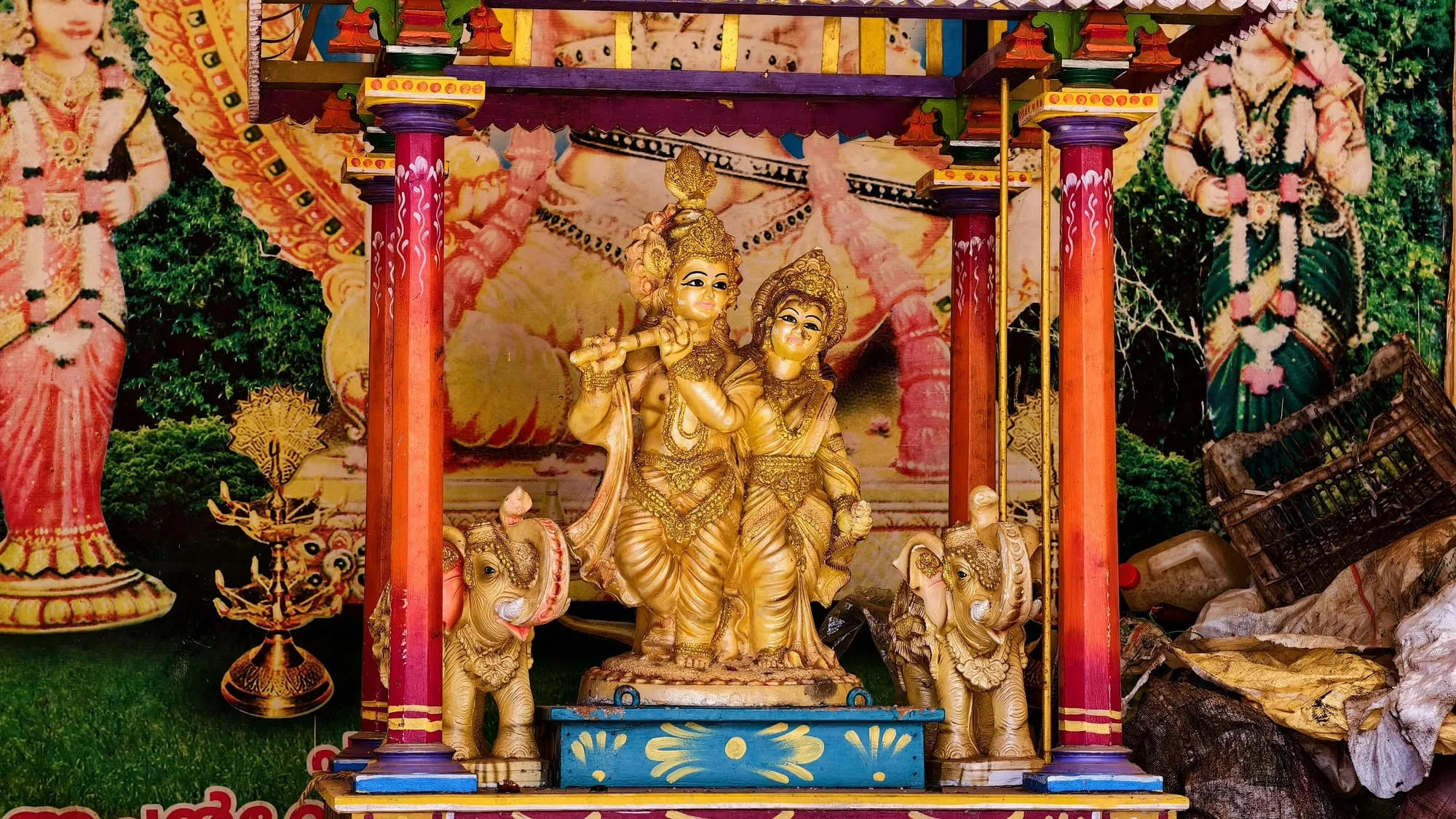
OM and the Logos
The Hindu tradition holds that reality is woven from a primordial sound, OM (AUM), the cosmic vibration that underlies and constitutes all phenomena. The Mandukya Upanishad treats OM as the totality of consciousness. Its three syllables map onto the waking state, the dreaming state, and deep sleep, and the silence after the sound maps onto the fourth state, Turiya, pure awareness. Krishna in Gita 7:8 identifies himself directly with OM: I am the syllable Om in the Vedic mantras.
The Christian Gospel of John opens with the same cosmological claim under a different name. John 1:1: In the beginning was the Word, and the Word was with God, and the Word was God. All things were made by him; and without him was not any thing made that was made. The Greek Logos, translated as Word in the KJV, carries the same cosmological function as the Sanskrit Pranava or OM. Reality is constituted by a primordial sound, vibration, or word that is identified with the divine itself. The case that the Christian scriptures are a coded operational manual rather than a history, and that verses like this are meant to be taken physiologically rather than literally, is the whole argument of The Real Bible.
The two traditions agree that the universe is acoustic at its base. The Hindu version preserves the contemplative practice attached to the claim: the practitioner chants OM, internalizes the vibration, and uses it to access the underlying reality. The Christian tradition mostly lost the practice and kept only the metaphysical statement. The contemplative reader who wants to actually work with the Logos doctrine has to go back to the hesychast Jesus Prayer or Quaker silence to find the practice attached to it. The Hindu side has kept that practice in continuous use for three thousand years.
What the West Lost
There is a question worth addressing directly. If the two traditions are saying the same thing, why does the Hindu tradition appear, to many readers, to preserve more operational content?
The answer is institutional history. The mainstream Western Christian church, between the third century and the high middle ages, suppressed most of its own esoteric and operational material. The Gospel of Thomas, which preserves the the kingdom is within you teaching in its most direct form, was buried in the Egyptian desert at Nag Hammadi around 367 CE and not recovered until 1945. The Gnostic literature was condemned and largely destroyed. Meister Eckhart was tried for heresy in 1326 and died before the verdict was delivered; Pope John XXII condemned twenty-eight of his propositions in 1329. The Quietist tradition was condemned in 1687. The Christian mystics who taught the immediate identity of the soul with the divine were treated as threats to ecclesiastical authority, and the institutional church suppressed them.
The Hindu tradition, partly because it lacked an equivalent centralized institution, kept its source texts in continuous use. The Bhagavad Gita has been read, recited, debated, and taught for at least 2,200 years without serious interruption. The Upanishads have been transmitted continuously since composition. Sanskrit has remained a living liturgical and scholarly language. The operational practices, meditation, mantra, pranayama, jnana yoga, bhakti yoga, karma yoga, have been preserved in living lineages.
This is not an argument that the Hindu tradition is superior. It is an observation that the Christian tradition’s institutional history caused the loss of much of its own operational content, while the Hindu tradition’s lack of equivalent institutional consolidation let its operational content stay intact. The reader who wants to understand the deep operational content of the Sermon on the Mount benefits, on a fair reading, from also reading the Bhagavad Gita. The two texts are commentaries on each other.
Closing
Krishna and Christ are not similar teachers. They are the same teaching delivered in different languages by two lineages that never met. The Bhagavad Gita and the Sermon on the Mount are not parallel scriptures. They are the same scripture, recorded twice, addressing the same human problem with the same operational answer. Action alone is your right. The fruits are not. Take no thought for the morrow. The kingdom of God is within you. Aham Brahmasmi. I and the Father are one. Tat tvam asi.
Different vocabularies, the same operation. Two and a half thousand years of continuous teaching across two continents pointing at the same set of facts about consciousness. The wager here is that this convergence is the most reliable signal available. When two traditions with no contact for most of their history, working in different languages and different cosmological frames, arrive at the same operational instructions, that agreement is telling you something about how the system actually works.
Krishna told Arjuna. Christ told the crowd. The teaching has not changed.
Sources
Primary (Hindu):
- Bhagavad Gita (Swami Prabhupada translation; Eknath Easwaran translation also recommended)
- The Principal Upanishads (S. Radhakrishnan translation), especially Bṛhadāraṇyaka, Chāndogya, Māṇḍūkya
- Sri Aurobindo, Essays on the Gita (1922)
- Swami Vivekananda, Karma Yoga (1896)
- Ramana Maharshi, Talks with Sri Ramana Maharshi (Munagala Venkataramiah, 1955)
Primary (Christian):
- The Gospel of Matthew, chapters 5–7 (the Sermon on the Mount)
- The Gospel of John (KJV)
- The Pauline epistles (Galatians, Philippians, Colossians)
- The Gospel of Thomas (Marvin Meyer translation; Nag Hammadi codices)
- Meister Eckhart, The Complete Mystical Works (Maurice O’C. Walshe translation)
Comparative scholarship:
- Aldous Huxley, The Perennial Philosophy (1945)
- Huston Smith, The World’s Religions (1958)
- Eknath Easwaran, Original Goodness: A Commentary on the Beatitudes (1989)
- Bede Griffiths, The Marriage of East and West (1982)
Scripture cited (KJV unless noted): Matthew 5–7; 6:28–29; 6:34; 11:28–30; 16:25. Luke 17:21. John 1:1, 14; 8:51, 58; 10:30; 11:25; 14:9, 20. 1 Corinthians 15:55. Galatians 2:20. Colossians 1:27. Philippians 4:6.
Bhagavad Gita verses cited: 2:20, 2:47, 4:7–8, 5:8–9, 6:30, 7:8, 9:22, 10:20, 10:32, 11:32, 18:66.
Upanishadic verses cited: Bṛhadāraṇyaka 1.4.10 (Aham Brahmasmi). Chāndogya 6.8.7 (Tat Tvam Asi). Māṇḍūkya 7 (Turīya).
Caveats stand. The two traditions are not identical at every point. The Hindu tradition’s caste-related teachings, the Christian tradition’s exclusivist soteriology, and the specific cosmological frames differ. The claim here is that the operational and metaphysical core, the divine within, action without attachment, surrender of the ego-self, the unreality of death, the divine name, is shared. The convergence is the wager here, drawn at the level of the operational substance rather than the institutional surface. Take nothing literally, subject everything to inquiry, keep what aligns with direct experience, and discard the rest.