Default Mode Network: Why Your Mind Won't Stop
The voice in your head is a neural network. Neuroscience mapped it as the Default Mode Network; the contemplative traditions named it three thousand years ago.
“Be still, and know that I am God.” — Psalm 46:10 (KJV)
“Bringing into captivity every thought to the obedience of Christ.” — 2 Corinthians 10:5 (KJV)
The voice in your head that runs every day from the moment you wake until the moment you fall asleep, narrating your life, replaying conversations, worrying about the future, rehearsing arguments you will never have, constructing the story of who you are and what you must do next: that voice is a neural network. Neuroscience has identified it, mapped it, and given it a name. It is called the Default Mode Network. It was formally described by Marcus Raichle and colleagues at Washington University in a 2001 paper in the Proceedings of the National Academy of Sciences, and the discovery is one of the more important findings in modern brain science.
The contemplative traditions have been pointing at this network for three thousand years under other names. The narrating ego, the chattering monkey-mind, the inner conversation, the left hemisphere’s commentary, the storyteller. Every serious contemplative practice that has ever produced sustained results in any tradition has been, in one form or another, a method for quieting this network. The mystics did not have the fMRI scans. They had something better. They had the direct experience of what happens when the network goes quiet, and they organized their lives around finding ways back to that state.
What follows walks through what the Default Mode Network is, what it does, why it is the neural substrate of almost everything described across the rest of these pieces, and the operational protocol for actually quieting it.
What the Default Mode Network Actually Is
The DMN was discovered by accident. Researchers using fMRI to study brain activity during specific cognitive tasks noticed that certain regions of the brain were consistently more active when subjects were not engaged in any task, when they were lying in the scanner waiting, letting their minds wander. The same set of regions deactivated as soon as subjects began a focused external task and reactivated as soon as the task ended. Raichle named this baseline pattern the default mode of brain function in 2001.
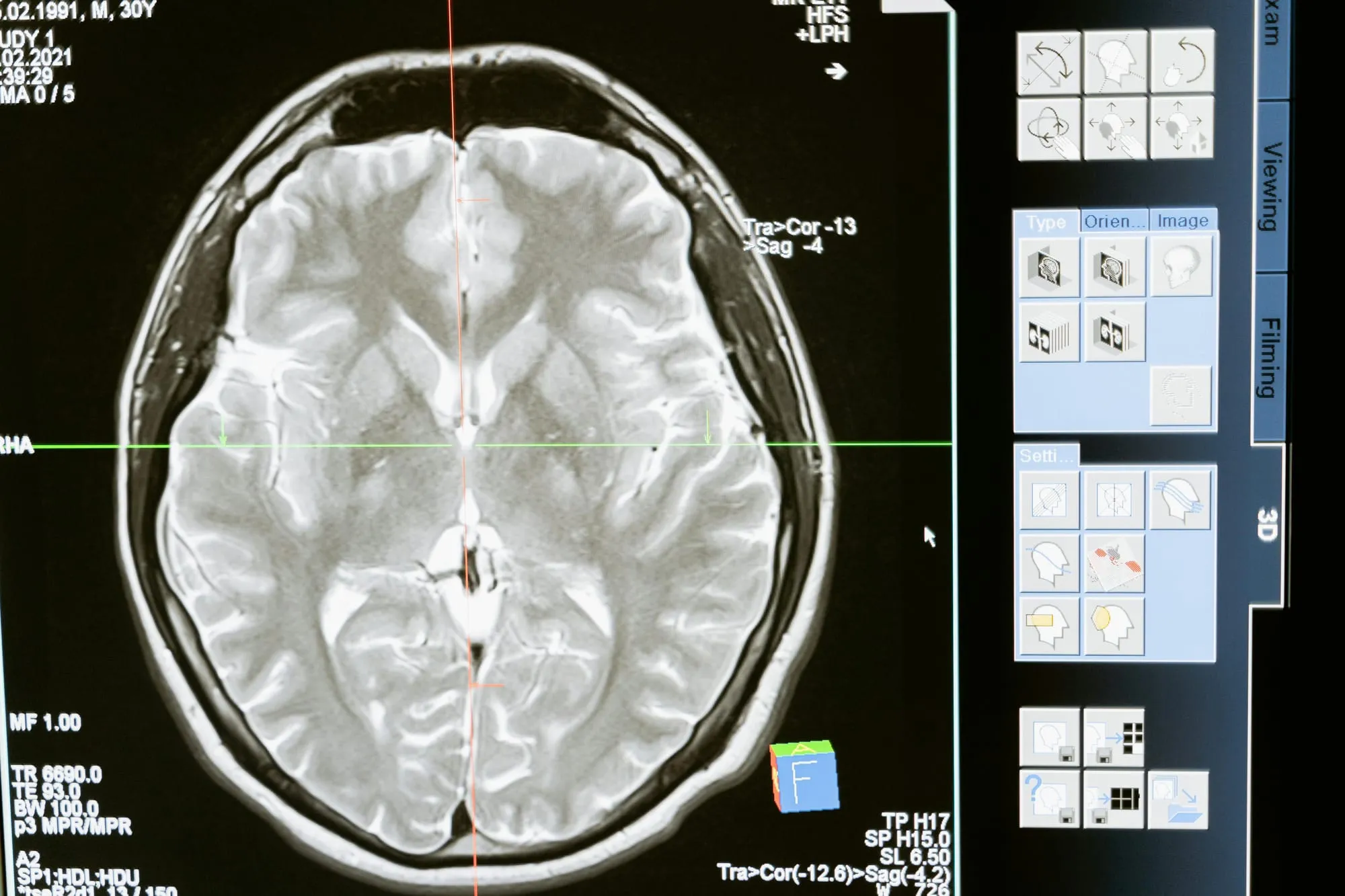
The network has several core regions: the medial prefrontal cortex (involved in self-referential thinking), the posterior cingulate cortex (central hub of the network), the precuneus (autobiographical memory and self-perspective), the angular gyrus (theory of mind), and connections to the hippocampus (memory) and the inferior parietal lobule. These regions are connected by long-range white matter pathways and tend to activate together as a coordinated system.
What the network does, functionally, is construct the narrative self. It is active during mind-wandering, autobiographical memory retrieval, future planning, theory of mind (thinking about what other people are thinking), moral reasoning about the self, and the sustained inner monologue that most people experience as thinking. It is the neural substrate of what introspectively feels like the I that has a life, a past, a future, opinions about people, and a continuous story.
The network is not a defect. It performs essential functions: autobiographical coherence, social cognition, future planning, self-modeling. The problem is not the network. The problem is that for most adults in modern life, the network runs continuously, dominates conscious experience, and never gets the rest periods that allow other modes of awareness to come online. The contemplative claim, and the claim here, is that the DMN is supposed to be one mode among several, used when its functions are required and quieted when they are not. For most people, it is the only mode they ever inhabit.
The Narrating Self
The DMN is the neural substrate of what the rest of this catalog has been calling the predicate-attaching machinery. The voice that says I am tired. I am late. I am bad with money. I am the kind of person who… is the DMN constructing self-referential meaning. The same voice that ruminates on a conversation from three days ago, rehearses what you will say to your boss tomorrow, replays the moment you embarrassed yourself in 2019, and constructs the story of who you are and what your life means is the DMN performing its primary function. It is autobiographical, predictive, social, and almost continuously running.
Iain McGilchrist’s hemispheric model maps onto this almost exactly. The DMN sits primarily in the brain’s midline structures, with significant left-hemisphere involvement, and its functional signature corresponds closely to what McGilchrist calls the Emissary, the analytical, language-based, narrative-constructing mode of cognition that has come to dominate modern consciousness at the expense of the contextual, present-moment, holistic mode he calls the Master. The Master is what is left when the DMN is quiet. The Emissary is what is happening when the DMN is loud.
Neville Goddard, writing in the 1940s and 1950s without access to any of this neuroscience, called the same phenomenon the inner conversation and made the regulation of it the central technique of his manifestation system. Self-observation will reveal the existence of more than one self, he wrote in Feeling Is the Secret (1944), but only one is the real Self. The non-real selves, the inner conversation’s continuous parade of predicates, are the DMN constructing them. The real Self is what remains when the construction is paused.
Paul’s instruction in 2 Corinthians 10:5, bringing into captivity every thought to the obedience of Christ, is the same operational instruction. The thoughts that need to be brought into captivity are the unbidden self-referential narratives the DMN generates continuously. The contemplative practice across every tradition is, at the neural level, the practice of DMN regulation. The vocabularies differ. The target structure is the same.
What Quiets the Default Mode Network
The neuroscience of DMN modulation is one of the most reproducible findings in contemplative neuroscience.
Judson Brewer’s lab at Yale and then Brown published the seminal paper in 2011 in the Proceedings of the National Academy of Sciences: experienced meditators showed measurably reduced DMN activity during sustained meditation, with the reduction correlated with subjective reports of self-dissolution and pure awareness. Subsequent studies have replicated this across mindfulness traditions, transcendental meditation, Zen, and various contemplative styles. The effect is dose-dependent: meditators with more cumulative hours show more sustained DMN modulation, even outside of meditation sessions.
Robin Carhart-Harris and the team at Imperial College London showed in 2012 and subsequent papers that psilocybin produces dramatic acute reduction in DMN activity, and that the magnitude of the reduction correlates with the intensity of the mystical experience subjects report. Other classical psychedelics (LSD, DMT, mescaline) produce the same DMN suppression. The therapeutic effects on depression, anxiety, and addiction that current psychedelic research is documenting appear to be mediated, in significant part, by this acute DMN modulation followed by a window of neural plasticity during which people can rebuild patterns of self-referential thinking on a different substrate.
Other interventions also produce DMN modulation, with varying degrees of evidence:
- Cold exposure (acute sympathetic activation followed by parasympathetic rebound modulates DMN)
- Cardiovascular exercise (sustained effort recruits other networks at the expense of the DMN)
- Flow states (Csikszentmihalyi’s work; the absorbed task focus deactivates the DMN almost entirely)
- Deep music absorption
- Sex and orgasm (acute DMN suppression)
- Cardiovascular and respiratory practices (Wim Hof breathing, holotropic breathwork)
- The hypnagogic and hypnopompic states at the boundaries of sleep
- Fasting at sustained durations (preliminary evidence; mechanism less clear)
Every one of these is something named across the rest of these pieces as an operational practice. The convergence is not coincidence. Each intervention works, in significant part, because it disrupts the network that constructs the narrating self.
Where the Catalog Lands
The DMN is the neurobiological substrate of almost everything described across the rest of this catalog. Each piece maps onto a different aspect of DMN function or regulation.
The argument in the I AM deep dive, that the divine name is your own self-awareness and the predicate-attaching version is the construction you must learn to drop, is a claim about the DMN. The bare I AM is what remains when DMN activity is suppressed. The I am tired, I am bad at, I am the kind of person who is the DMN actively constructing predicates.
The argument in The Biology of Belief, that belief is a biological signal the cellular machinery executes, is structurally consistent with the DMN as the channel through which belief is most loudly broadcast. The DMN running I am sick is the cellular machinery’s primary input on your identity. Changing the input requires changing what the network is generating.
The argument in Be Like a Child, that lightness and play are the operational substrate of every long-arc game, maps onto the developmental neuroscience of the DMN. Children’s DMNs are less developed and less dominant than adults’. The four-year-old who can fully inhabit being a pirate at 3:00 PM is operating with a DMN that has not yet been trained to constantly construct narrative self-referential meaning. The adult who recovers some of that capacity has, in functional terms, learned to modulate the DMN.
The argument in Limerence, that intrusive obsessive thought about a specific person is the manifestation mechanism running in reverse, maps onto DMN hyperactivation around a specific predicate. The limerent person’s DMN is running I am someone who needs them on continuous loop, and the network is doing its job, generating self-referential narrative about the object of attachment.
The argument in The Laziness of Apex Predators, that rest is the operating mode of the top of the food chain, maps onto the DMN’s metabolic cost. The DMN, when active, consumes roughly twenty percent of the brain’s energy budget despite occupying a smaller fraction of brain volume. Someone running a constantly active DMN is, at the metabolic level, burning fuel on continuous self-construction rather than reserving it for high-priority output.
The argument in Quitting Caffeine, that EEG band signatures matter for manifestation, maps onto the DMN’s specific frequency profile. The DMN is most active in low-frequency oscillations (slow alpha, theta-band) during mind-wandering, and the caffeine-driven beta state suppresses the broader patterns of awareness while still keeping the DMN’s narrative content active. The combination is the worst of both: beta-driven anxious narration without the broader contextual awareness that quieter states allow.
The contemplative traditions have been pointing at the DMN for three thousand years. Modern neuroscience has just confirmed what they were pointing at.
The Pathology Connection
The most striking finding in DMN research over the last fifteen years has been the strong association between DMN hyperactivity and several major mental-health conditions.
Major depressive disorder is associated with sustained DMN hyperactivity, particularly in the regions involved in self-referential rumination. Studies by Norman Farb and colleagues, and subsequent replications, have shown that the depressed mind is essentially a DMN that has gotten stuck on a particular set of negative self-referential narratives and cannot disengage from them. The standard cognitive description of depression as rumination turns out to be neurally specific: their DMN is generating the same self-negating predicates on continuous loop.
Anxiety disorders, particularly generalized anxiety and obsessive-compulsive disorder, show similar DMN signatures with different content. The DMN is hyperactive; the content is fear-and-threat-focused rather than depression-focused; the inability to disengage is the same.
Addiction shows DMN hyperactivity around the object of addiction. The smoker’s DMN generates continuous narrative about cigarettes; the alcoholic’s about alcohol; the compulsive eater’s about food. The addiction is, at the neural level, a DMN running a particular kind of content on continuous loop.
Limerence, as the prior piece in this catalog documented, shows DMN hyperactivation around a specific person. The pattern is structurally identical to the substance-addiction pattern with a human object.
Chronic worry, perfectionism, social anxiety, body dysmorphia, post-traumatic intrusive thoughts: the list goes on. The common factor across most of the major disorders of self-referential cognition is DMN hyperactivity. The content varies. The network is the same.
This is not a claim that all mental illness reduces to DMN dysfunction. Schizophrenia, bipolar disorder, autism, and several other conditions involve different neural systems and require different interventions. But the substantial cluster of conditions that involve intrusive, repetitive, self-referential thinking are all, at the neural level, expressions of a network that has gotten stuck on its own output and cannot return to baseline.
The Operational Protocol
The protocol for DMN modulation is essentially the protocol for everything else in this catalog. The convergence is the validation. If multiple traditions and modern neuroscience all point at the same target structure, the practices that target it are the practices worth running.
First, the SATS window. The hypnagogic state at sleep onset and the hypnopompic state at wake-up are windows of natural DMN suppression. The analytical filter is offline. Anyone who deposits a new assumption at the SATS window is depositing it during a period when the DMN’s normal predicate-generation is not running. Three to five minutes of felt-real assumption at these windows is worth hours of conscious affirmation during the day. Most of the manifestation work in this catalog is, at the neural level, SATS-window programming during natural DMN quiescence.
Second, sustained meditation. The Brewer research is conclusive. Meditation with sustained practice produces measurable DMN modulation that persists outside of meditation sessions. The dose-response curve is steep: ten minutes a day for a few weeks produces noticeable subjective changes; an hour a day for several years produces measurable structural changes in the network itself. The recommendation here is open-monitoring meditation, sustained attention to the bare awareness without focusing on any particular object, as the practice that most directly targets DMN suppression.
Third, the soft gaze practice. Releasing foveal targeting and allowing peripheral vision to dominate is a direct intervention on the analytical network that overlaps significantly with the DMN. Ten to fifteen minutes of soft gaze, sustained, produces a measurable shift toward parasympathetic dominance and DMN quiescence.
Fourth, cold exposure. The acute sympathetic activation from a two-minute cold shower or cold plunge is followed by extended parasympathetic rebound that includes DMN modulation. The Andrew Huberman research, and the Wim Hof tradition before it, point at the same phenomenon. Cold exposure is one of the most accessible non-pharmacological DMN interventions available.
Fifth, sustained breathwork. Wim Hof rounds, holotropic patterns, Buteyko-style retention all produce DMN modulation through different mechanisms (sympathetic-parasympathetic cycling, CO2-driven cerebral effects, the specific neurological signatures of breath retention). Even simple box breathing (four counts in, four hold, four out, four hold) for five minutes produces measurable parasympathetic shift.
Sixth, sustained cardiovascular exercise. Forty-five minutes of zone-two cardiovascular work, particularly outdoors, produces an extended DMN-quiet state during and after exercise. The runner’s-high research overlaps significantly with the DMN literature; what is subjectively experienced as the quiet, present, alert calm after a long run is, in neural terms, a DMN that has been suppressed by the metabolic demands of the cardiovascular work.
Seventh, fasting. Sustained fasting (twenty-four hours and beyond) produces measurable changes in brain metabolism that include DMN modulation. Fasting and Manifestation covers this in operational detail. The cleaner cognitive state people report at thirty-six to seventy-two hours of fasting is, at least partially, a DMN that has lost its primary fuel source and quieted as a result.
Eighth, and the wager here: the SATS window combined with deliberate predicate installation is the highest-leverage single intervention available. The DMN is naturally quiet at the SATS window. Anyone who shows up at that window with a specific assumption to deposit is using a moment of natural network quiescence to install programming that, once installed, the DMN will then generate during waking hours as the new default narrative.
Closing
The voice in your head is a measurable thing. The thing the contemplative traditions have been pointing at for three thousand years, the substrate beneath the chatter, the bare witness, the I AM, the Master, the Christ within, the Atman, is also measurable, as the absence of activity in this specific network. The work is not new. The mechanism is new. The convergence between the mystical literature and the fMRI scans is the wager here that both are pointing at something real.
The Default Mode Network is the neural substrate of the predicate-attaching ego. The contemplative practices described across the rest of this catalog are, at the neural level, the practices that modulate this network. Whoever learns to quiet the DMN has access to the substrate beneath the narration, which is the only substrate from which the manifestation work, lightness, presence, and equanimity can actually be run. The fuller case on what arrives in the network’s quiet, and across four other domains where silence is signal rather than absence, is Silence as Signal: The Still Small Voice.
Be still, and know.
Sources
Primary neuroscience:
- Marcus E. Raichle et al., “A default mode of brain function” (PNAS, 98:676–682, 2001)
- Debra A. Gusnard and Marcus Raichle, “Searching for a baseline: functional imaging and the resting human brain” (Nature Reviews Neuroscience, 2:685–694, 2001)
- Bharat Biswal et al., “Functional connectivity in the motor cortex of resting human brain using echo-planar MRI” (Magnetic Resonance in Medicine, 1995), earliest resting-state work
Meditation and DMN:
- Judson A. Brewer et al., “Meditation experience is associated with differences in default mode network activity and connectivity” (PNAS, 108:20254–20259, 2011)
- Judson Brewer, The Craving Mind (2017)
Psychedelics and DMN:
- Robin L. Carhart-Harris et al., “Neural correlates of the psychedelic state as determined by fMRI studies with psilocybin” (PNAS, 109:2138–2143, 2012)
- Robin Carhart-Harris and David Nutt, “Serotonin and brain function: a tale of two receptors” (Journal of Psychopharmacology, 2017)
- Michael Pollan, How to Change Your Mind (2018)
Depression and DMN:
- Norman A. S. Farb et al., “Attending to the present: mindfulness meditation reveals distinct neural modes of self-reference” (Social Cognitive and Affective Neuroscience, 2007)
- J. Paul Hamilton et al., “Default-mode and task-positive network activity in major depressive disorder” (Biological Psychiatry, 2011)
Convergence:
- Iain McGilchrist, The Master and His Emissary (2009), The Matter with Things (2021)
- Neville Goddard, Feeling Is the Secret (1944), on the inner conversation
- Mihaly Csikszentmihalyi, Flow: The Psychology of Optimal Experience (1990)
- Jill Bolte Taylor, My Stroke of Insight (2008)
Scripture (KJV): Psalm 46:10. James 1:8. Romans 12:2. 2 Corinthians 10:5. Philippians 4:8.
Caveats stand. The Default Mode Network is a well-replicated finding in modern neuroscience, but the precise relationship between DMN modulation and the subjective states described by the contemplative literature is an active area of research, not a settled correspondence. The reading here, that the network is the neural substrate of the narrating ego and that quieting it is the substrate of contemplative practice, is consistent with the current literature but goes beyond what the literature has formally established. The practices recommended in this piece are non-pharmacological and broadly safe; the psychedelic research is noted for context and is not a recommendation. Take nothing literally, subject everything to inquiry, keep what aligns with direct experience, and discard the rest.